

Measure for Measure
Folger Theatre
PreviewsSep 22, 2026
OpensSep 27, 2026
ClosesNov 1, 2026
DCPlayPublished on September 30, 2026
One of Shakespeare's more tonally complex plays doesn't get any clearer in a muddied production that manages to stand on the legs of its strong leads.
Book6/ 10
Quality of the script and book
Acting9/ 10
Strength and consistency of performances across the cast
Production4/ 10
Direction, choreography, and technical stagecraft
Viz3/ 10
The marketing, identity, and visual development of the specific production
How to get there:
Folger Theatre
Capitol SouthBOSD10D1XCaBi♿
201 E Capitol St SE, Washington, DC 20003
Intro
There are problem plays: the types of work defined by their realism and blunt embrace of Society's Problems(TM). Think Brecht's "Epic theatre", or anything by Ibsen. Then, there are Shakespearean ones: basically the same, but in a context from two hundred years prior before contemporary audiences quite "got" the concept of a dramedy, which are par for the course in modern theatrics. These flip between comedy, as they knew it, and classical drama with reckless and jarring abandon, to the point where "problem" by some critics seems to attribute to the show itself instead of its content. Measure for Measure holds this title, and as such doesn't get put on much. Enter Folger, who drops the dramedy down in Capitol Hill for its season-opening foray directed by Psalamayene 24.
Book
In what could even be a prototypical courtroom drama, Measure for Measure is about justice. The plot follows Isabella, an innocent woman entering nunhood just as her brother Claudio is imprisoned for light fornication with his betrothed. This technicality is usually overlooked, but the Duke is away on business, and his caretaker the Provost has began ruling Vienna with an iron fist to the letter of the law. When she makes the case to the Provost to save her brother from execution, he forces her into a position of compromise between her faith and sense of righteousness that forms the crux of the piece. The play is remarkably complex in these themes at times, and it felt very modern for a Shakespeare piece in its textual execution. It does fall back into the 16th century tropes, however, which detract from its maturity. Soliloquizing side characters and snarky supporters show up to push a story along that was happening quite interestingly, and the humor just didn't seem to match the same way your Pucks and Falstaffs do in other Bard works. The ending, famously ambiguous too, is typically up for directorial interpretation, but outside of a resounding rejection, just doesn't make sense. (And that kind of ending seldom does; looking at you, My Fair Lady.)6/10
Acting
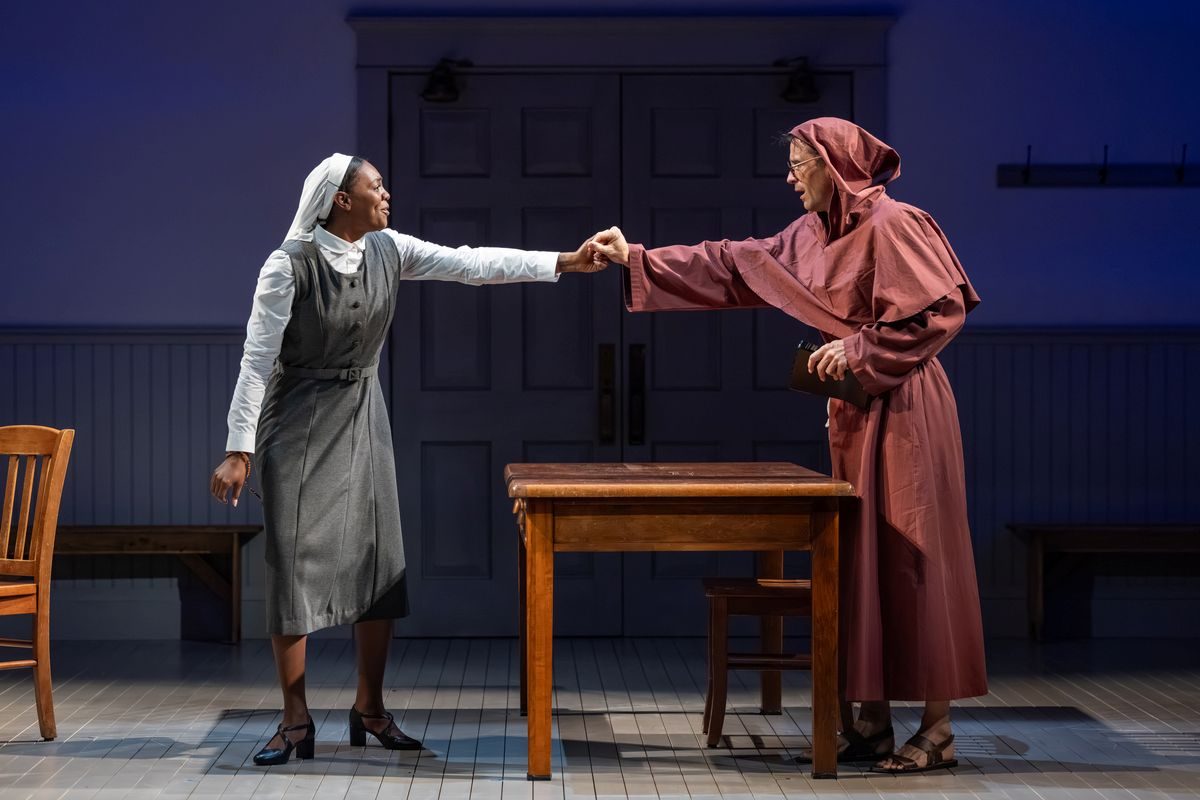
The ensemble is a talented bunch of DC favorites that are anchored by a particularly strong duo of Renea S. Brown -- whose Isabella should rightfully command more Shakespeare roles from her -- and Nathan Darrow's Duke. The pair maintain a strong and nuturing chemistry, even with its somewhat strange ending. So, too is strong the villainy of Sean Fri's Provost and JaBen Early's towering Claudio. 9/10
Production
Anyone else remember the "Shakespeare with a Southern accent" challenge from TikTok? Director Psalmayene 24, whether or not purposefully, has taken Measure down to Dixie in this production, and the accents do make it enjoyable (when consistent). The action is staged in a southern courthouse designed by Debra Booth, featuring elements of segregation-era separate-but-equall-ness such as water fountains that work for white characters and not colored ones. That specific element is one of the ways an angle of racial struggle is shoehorned into the piece but is left, well, struggling. It's probably the most effective, yet also the least important, taking place when other characters are doing the main talking and not the ones drinking the water. Heavier-handed attempts are made throughout, culminating in a floundering use of "Justice" held up on a sign by Isabella in the audience, evoking a weird form of performativity from a canon that has been quite well-known to challenge society. But the remaining stylistic choices mostly work out well. The costumes by Mika Eubanks are blocky and stylish for the period, but standing out when they need to, such as the well-done patterns for Mistress Overdone (though not every one of LaShawn Melton's wigs are as well-made as the costumes).4/10
Visual Identity
Folger leads with a more dramatic visual language in this, with torn stripes on a red background. This being one of Shakespeare's least-produced plays, I was hoping for some of this to make more sense as it unfolded, but doesn't really come into play. Nor do the Jim Crow-era signs present onstage either, setting up a potentially delectable infusion of civil rights that never materializes.3/10
Overall
22/40

