

DCMusical
Somewhere Over the Border
Mosaic Theater Company
September 14, 2026
PreviewsSep 10, 2026
OpensSep 13, 2026
ClosesOct 18, 2026
A jubilant, yet harrowing take on an American classic is energized by brilliant characters and a flavorful score.
Book / Music10/ 10
Quality of the script, book, and the music and lyrics
Acting10/ 10
Strength and consistency of performances across the cast
Production7/ 10
Direction, choreography, and technical stagecraft
Viz10/ 10
The marketing, identity, and visual development of the specific production
Intro
Brian Quijada's musical modus operandi is that the Latino experience is inherent to the American Canon. Mexodus, his 2024 collaboration with Nygel D. Robinson, proved more than anything the existential connection between the United Mexican States (its legal name) and the American ones, and it's why that musical about the Underground Railroad that went south was such a slam dunk when it hit Mosaic that year. The version of that idea that he brings back to H Street this time around (nearly a decade after being workshopped here) involves another deep-rooted part of Americana, The Wizard of Oz. This time, swap out tacos y huaraches por pupusas revueltas e yuca con chicarrón: in Mosaic's season-opening Somewhere Over the Border, our Dorothy, or Reina, now kicks things off in El Salvador during the worst of its autocratic insurgency in the late 70's. If that premise sounds incredible to you by itself, then I've got great news: it is, and even occasionally-strained direction can't stop its barreling path forward.
Book / Music
So, the parallels of The Wizard of Oz to the odyssey of a migrant woman's journey to the US is such an obviously smart comparison on paper, that I'm not sure why it hasn't been done before. Of course, it takes more than an idea to make a musical work. It needs talent, heart, creativity, and pain to get a soul into the piece, the element that takes a musical from good, past great, to excellent. Quijada seems to pull all that off effortlessly: while the score of Border has its similarities to the rap stylings of Mexodus, especially in its ever-marching earworm of an opener, "Everyday Towns", it continues uniquely along its own yellow-brick path, with 25 songs and reprisals along its 100-minute runtime that are sonically varied and stuffed to the brim with emotive storytelling. This story being that of Reina, a single mother in rural El Salvador during its most violent era. She lives with her mother (single as well) and brothers, who help her care for Fernando, her infant son. When she learns from one of her customers at the market that their daughter had moved to California and secured papers for her whole Salvadoreño family, she embarks on an expensive and meandering journey to Tijuana to find "The Gran Coyote" who will help her cross the border and find a better life. No yellow bricks here, no dogs named Toto, not even her son, who gets left with her mother; just a more visceral and often scary series of bus journeys for a small-town woman with little formal education and even less English. Between bus rides she meets other characters along the way who have their own reasons for meeting with the Coyote, and these are by far the best part of Quijada's book. A farmer who wants to go to university, a heartbroken innkeeper dressed in argent blue, and a cowardly nun with a lifelong desire to be a roquera are brilliant storytelling bridges between the vibrant culture of Latin America and the Ozian characters of yore that felt second nature to behold, and how the quartet make their moves through this treacherous journey makes for a heart-pounding and tear-welling conclusion that makes you wonder just how much of Border is fiction. 10/10
Acting
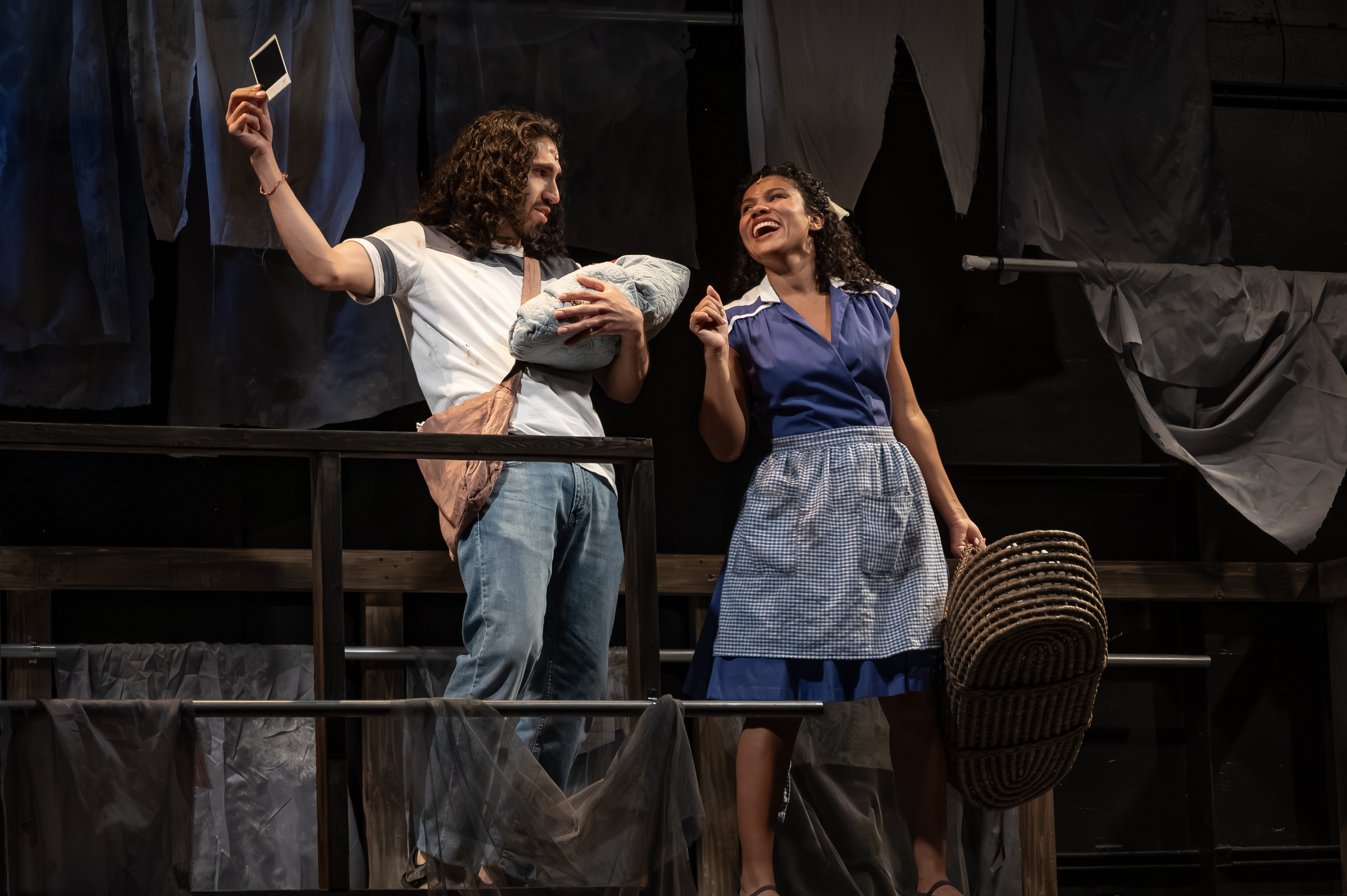
The cast is relatively small in number, made up of just six, and for an adventurous piece like this I could easily see it with an expanded ensemble. However, these six knock it out the park even with the juggling of multiple roles -- particularly present with a joyous showing by Camilo Linares. Linares is mostly the narrator, but his presence expands to be a number of delectable side characters, such as a chameleonic bus driver, a child, and a smuggler. Pepin's Reina has a uniquely full voice, cloudy and sweet like unfiltered apple juice, that brings a lot of powerful attention and completeness to the character. Yet, it's their accompanying trio that I found brought the most excitement to the piece. Oscar Salvador, Jr. cleverly splits between Pepin's jaded yet supportive brother Adán and Cruz, a Guatemalan farmer seeking to put his existing brain to use. Mejiah is a delightfully salty and sweet combo as pupusador Napoleon and then Silvano, the despondent alcoholic Mexican innkeeper with a broken heart. Gloria Vivica Benavides, frankly, steals the show each time she shows up: first as Antonia, one of Reina's coffee bean customers, and then as Leona, the nun who wants a totally different life than she has, but in a much more fun way than the protagonist's. 10/10
Production
Caldwell's production is rife with staging potential, but only hits about 70% of it. To start, the brutal staging makes a lot of sense in the opening third, but as Reina's journey becomes more fantastical, her collaborators more fleshed out, her environment fails to match it. The most exciting physical stage element is the central revolve which transitions from farm house to bus station to actual bus, leaving all of the other gray blocks around it to languish. The set is also bi-level, but that too is utilized poorly, as much of the action that occurs on the upper level becomes obscured by thin, layered drapery that flutters across the ceiling of the space. That's mostly a disappointment since up there is where get properly introduced to the choreography from Tony Thomas, which is fluid and jolly throughout the piece. Alberto Segarra does pull off some creative synergy with the set via cleverly colorful lighting in the latter two-thirds; but those moments feel short-lived. Outside of the brusque, blocky canvas of a stage, the production has so much life under the hood that yearns to be let out. If Reina can make such an epic journey to free herself from the limitations of her old life, why can't the musical reflect that?7/10
Visual Identity
Like Mexodus, the American Southwest-inspired visual branding is cleverly tied in with a musical theme: the Stars and Stripes representing a musical staff behind the arid landscape, featuring Reina walking a musical yellow brick (piano key) road towards her dreams. It's warm, slightly cynical with the red stripes not being accompanied by white counterparts, reasonably representing the bloodshed many deal with on the trip to the border. Conversely, the pre-show environment is much drabber, but makes sense to establish an opening setting. Walking in the space, you have navigate to in proximity of the drapery of hung-up-clothes before coming across a concrete village. The drabbery of the town, a brilliant callout to the black-and-white opening of the Oz10/10 film, creates such an anticipatory environment that I was a huge fan of.
Overall
37/40

